
Learn why diesel diagnostics should always come before repairs and how accurate testing can help identify problems, avoid unnecessary parts replacement, and reduce costly truck downtime.
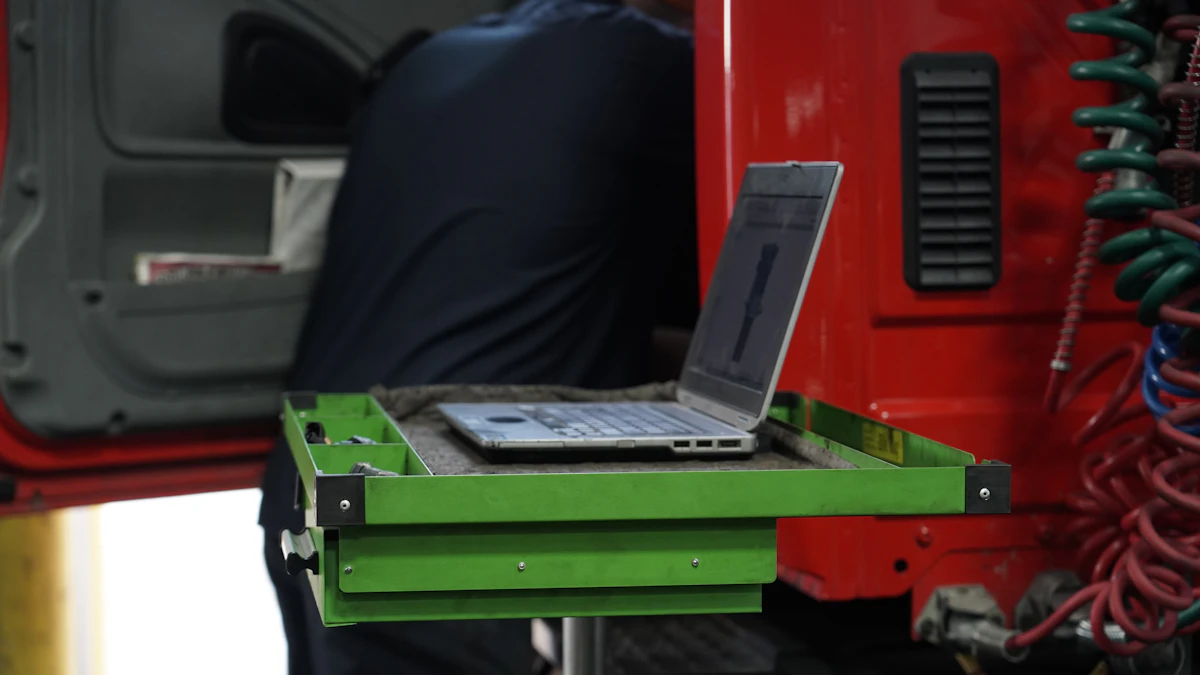
Your business relies on your truck clearing mile after mile. So, when your rig loses power, throws a warning light, runs rough, or refuses to start, your first instinct may be simple: find the bad part and replace it.
Unfortunately, diesel problems aren't always that straightforward.
Modern heavy-duty trucks combine mechanical components with sensors, wiring, electronic controls, fuel systems, cooling components, and emissions equipment. One symptom can have several possible causes. That's why diesel diagnostics should come before repairs. Testing the truck first gives technicians the information they need to identify the underlying problem instead of relying on assumptions.
For you, that can mean fewer unnecessary parts, less downtime, and a repair that actually addresses the problem.
Why Guessing at Diesel Repairs Can Get Expensive
Parts swapping is exactly what it sounds like. A component looks suspicious, so it gets replaced. If the problem remains, they replace another component.
Before long, you've spent money without getting much closer to the answer.
A truck that lacks power, for example, doesn't automatically have a failed fuel injector. Likewise, an overheating engine doesn't necessarily need a radiator. Common causes of overheating can include a malfunctioning fan clutch, a plugged radiator, or a faulty water pump.
Good heavy-duty truck diagnostics narrow down those possibilities.
Instead of asking, "What part usually causes this symptom?" a technician can ask, "What evidence tells us what's happening on this particular truck?"
That distinction matters.
What Diesel Diagnostics Actually Involve
Diesel diagnostics involve much more than connecting a scan tool and reading a fault code.
A diagnostic process can combine electronic information with physical inspections and system testing. Depending on the complaint, a technician may need to examine fluids, wiring, sensors, mechanical components, operating conditions, or related systems.
Modern trucks make this process particularly important because computers control many vehicle functions. The Engine Control Module (ECM), for example, manages aspects of engine operation, while automated and automatic transmissions can rely on electronic controls for shifting.
A fault code gives technicians a starting point. It doesn't necessarily hand them a repair on a silver platter.
Trouble Codes Provide Clues, Not Always Conclusions
Suppose your check engine light comes on and a diagnostic scan reveals a fault associated with an emissions system.
That information matters, but it's only the first step.
Modern diesel after-treatment equipment can include an EGR system, DPF, SCR system, DEF-related components, and a diesel oxidation catalyst. These components perform different jobs but operate within the broader emissions system.
The DPF, for instance, captures diesel particulate matter and relies on regeneration to burn accumulated carbon. Sensors help determine when that process is required. Faulty sensors can interfere with regeneration and may force regeneration when it isn't needed.
Replacing the DPF without identifying why regeneration failed could miss the real problem.
Diagnostics Help Find the Root Cause
Symptoms tell you something is wrong. Root cause diagnostics help determine why.
Consider a truck experiencing low oil pressure. Diesel engines need sufficient oil pressure to lubricate critical components such as crankshaft bearings. Low engine oil or an oil pump problem can cause that loss of pressure, and continuing to drive can lead to catastrophic engine damage.
That's a situation where guessing simply isn't worth the gamble.
Proper testing separates symptoms from causes and helps technicians determine which system actually requires attention.
Diesel Systems Don't Operate in Isolation
One reason commercial truck diagnostics can become complicated is that your truck's major systems work together.
Your engine generates mechanical power. The transmission optimizes and transfers that power into the driveline. The cooling system manages heat. Engine oil lubricates internal components and can help transfer heat through an oil cooler. Meanwhile, the alternator converts mechanical energy into electricity used by the truck's electrical system and to recharge its battery.
The after-treatment system then manages exhaust emissions.
Quite a crowd, right?
When one part of that chain develops a problem, symptoms can sometimes appear elsewhere. Diagnosing the complete system before replacing components helps avoid treating an effect while overlooking its cause.
Diagnostic Testing Can Reduce Unnecessary Repairs
Nobody wants to pay to replace a perfectly good component.
Accurate diesel engine diagnostics help technicians establish what is functioning correctly alongside what isn't. That's valuable because eliminating possible causes can be just as important as confirming the failed component.
Take a starting problem.
The diesel ignition process involves several components, including the battery, starter motor, fuel injection system, and glow plugs. The starter rotates the crankshaft while fuel enters the combustion chamber and the engine prepares for combustion.
If your engine won't start, replacing the starter simply because the engine isn't cranking normally could be premature. Testing helps narrow down which part of the starting process has actually failed.
That saves time, parts, and frustration.
Diagnostics Matter for Preventive Maintenance Too
You don't need to wait for a breakdown before paying attention to your truck's condition.
Preventive maintenance takes the opposite approach. Rather than reacting after something fails, you inspect and maintain components so you can address developing problems before they escalate.
A preventive maintenance program can include regular fluid checks, brake evaluations, tire inspections, and automated system maintenance. This approach can improve performance, reduce breakdown risks, and help minimize costly downtime.
Diagnostics complement that strategy.
When you notice unusual operating behavior during routine maintenance, investigating it early can let you correct a manageable issue before you're sitting on the shoulder waiting for help.
When Should You Have Your Diesel Truck Diagnosed?
Don't ignore a truck that's telling you something has changed.
Arrange a diesel diagnostic service when you notice persistent warning lights, abnormal engine performance, hard starting, unusual shifting, overheating, unexpected emissions-system problems, or unexplained changes in how the truck operates.
Pay particular attention to changes that could indicate lubrication, cooling, or braking problems. Heavy-duty trucks operate under demanding conditions, and failures in critical systems can have consequences well beyond an inconvenient repair bill.
When in doubt, getting a proper diagnosis is safer than continuing to drive and hoping the symptom disappears.
A Better Repair Starts With Better Information
Effective diesel repair shouldn't begin with assumptions. It should begin with evidence.
Diesel diagnostics give technicians a chance to understand the complaint, evaluate related systems, identify likely causes, and determine what actually needs repair. That's especially important on modern trucks, where mechanical systems, electronic controls, emissions equipment, and sensors work side by side.
If your truck is showing warning lights, losing performance, overheating, or simply isn't behaving normally, don't start throwing parts at the problem.
Let the diagnosis lead to the repair.
For professional diesel diagnostics in Oxnard, CA, contact Max Dieseltronics to have your truck's problem evaluated before deciding on the appropriate repair.
News & Articles
Read About The Latest in Industry
Here, you'll find regular articles covering a wide range of topics related to diesel repair, maintenance, and troubleshooting.
.webp)



Customer Testimonials
Can't say enough positive things: punctual, knowledgeable, hard-working, problem solver, positive attitude...it was a pleasure and we greatly appreciate having so many assets up and running!
I had an ECM on a caterpillar 3126 motor Motorhome which is very hard to get programed in California due to software costs and could not fine a mobil guy. I contacted Max who asked for some engine numbers and said would call back. the next day called back and came out Saturday morning pluged his system into my computer and within couple hours he fixed the issues. I found Max very smart and No BS. besides being a nice guy I trust him going forward and would recommend his services. i live in Ventura county
Great service and communication. We have used Max now for our Kubota Skidsteer and also our JLG Telehandler. He got us back up and running quick at our jobsite which was a major plus not having to load up and haul to a repair shop. Highly recommend their services!
Contact Us
Max Dieseltronics provides professional mobile truck repair services to a 50 mile radius around Oxnard, California, including Santa Clarita, Santa Barbara, Thousand Oaks, Ventura, Simi Valley, Malibu, & more. Give us a call, send us an email, or fill out our service request form to get in touch!
Contact Information
Phone Number
Hours
7:00AM - 6:00PM
24/7
Emergency Services - Subject To Availibility